ADA Compliance and Your Municipal Website: What You Need to Know
ADA, or the Americans with Disabilities Act, is a law from 1990 that prohibits discrimination against individuals with disabilities and provides them with the same rights and opportunities as everyone else. Today, ADA Compliance extends beyond physical space and into the digital world.
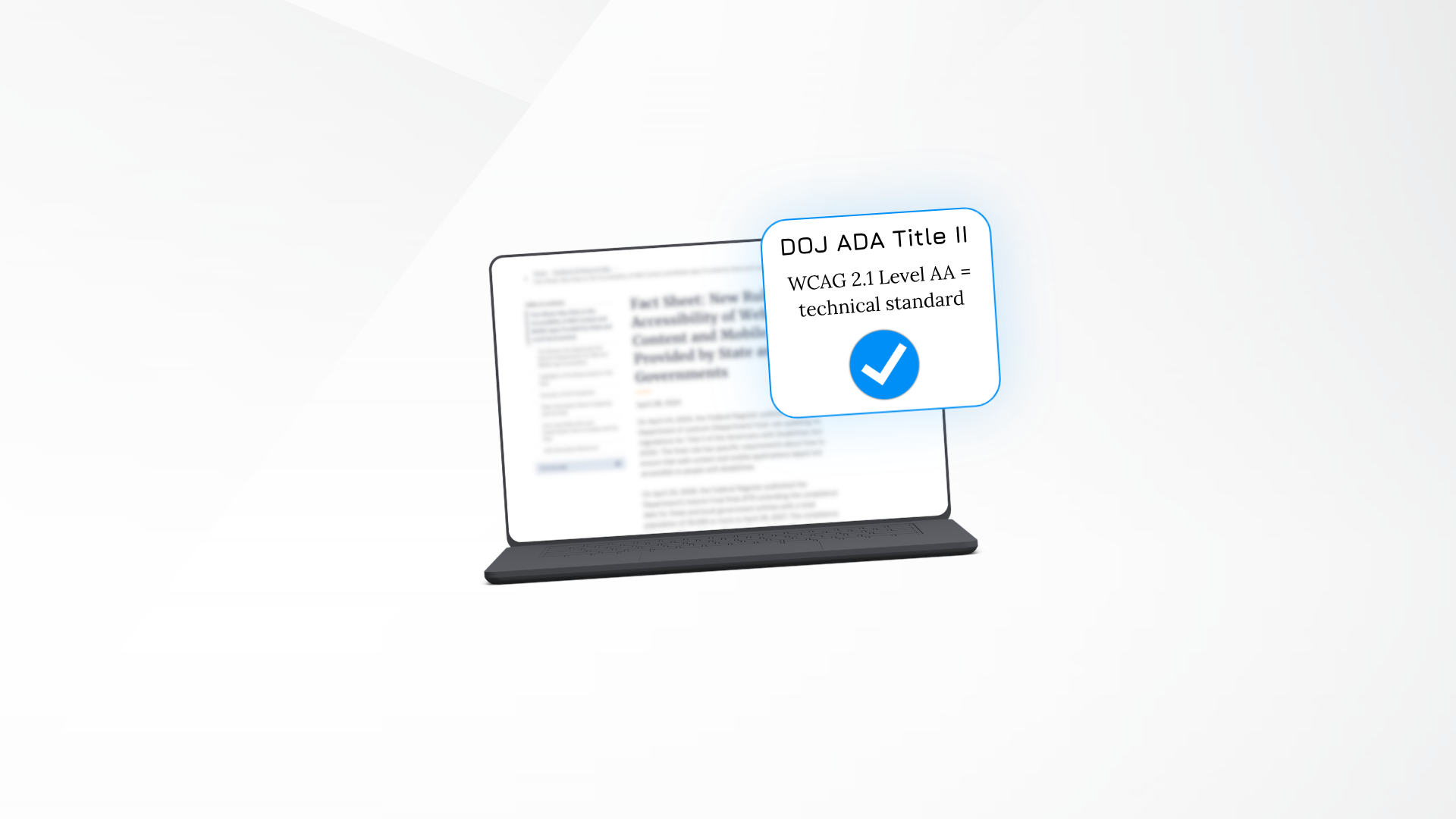
To help ensure equal online access, the U.S. Department of Justice (DOJ) has established accessibility standards for state and local government websites under the Web Content Accessibility Guidelines (WCAG) 2.1, Level AA. These ADA-compliant standards allow residents with visual, auditory, physical, or cognitive disabilities to access online information and services.
According to ADA.gov, on April 24, 2024, the Department of Justice updated its Title II regulations to require state and local government websites and mobile apps to be accessible to people with disabilities. The compliance deadlines were later extended, giving public entities serving populations of 50,000 or more until April 26, 2027, to comply, while smaller governments and special districts have until April 26, 2028.
Understanding Key ADA Accessibility Terms
Before diving into the requirements, it helps to understand a few commonly used terms:
- ADA (Americans with Disabilities Act): A federal law that protects people with disabilities from discrimination and requires equal access to public services.
- WCAG (Web Content Accessibility Guidelines): The accessibility standard used to help ensure websites and mobile apps are usable by people with disabilities.
- WCAG 2.1 Level AA: The web accessibility standard governments must generally follow. It includes requirements for things like keyboard navigation, color contrast, captions, and screen reader compatibility.
- Accessibility: Making websites, apps, and digital content usable by people with disabilities.
- Title II: The section of the ADA that applies to state and local governments and the services they provide.
- Level AA: ADA Compliance and WCAG Standard (Smart XEO Supported) is the industry-standard level for ADA compliance, providing a more accessible and user-friendly experience for most people.
- Level AAA: ADA Compliance and WCAG Standard (Smart XEO Supported) is the highest level of accessibility and includes additional enhancements that make content even more accessible.
- Screen Reader: Assistive software that reads website content aloud for people who are blind or have low vision.
- Alternative Text (Alt Text): A text description added to images, so screen readers can describe them to users.
What Are the Requirements?
Under the updated rule, U.S. government websites and mobile applications must generally:
- Be accessible to individuals with disabilities.
- Work properly with assistive technologies such as screen readers.
- Meet WCAG 2.1 Level AA standards.
- Ensure accessibility across websites, forms, documents, videos, images, and other online content.
- Maintain accessibility even when third-party vendors develop or manage content on behalf of the government.
- Continue providing effective communication and equal access to government services.
Are There Any Exceptions?
Yes. The DOJ has identified several limited exceptions, including:
- Archived content that is no longer updated and is kept only for reference or record-keeping purposes.
- Older documents published before the compliance deadline that are not actively used to access government services.
- Content submitted by residents or other third parties that the government does not control.
- Secure, account-specific records, such as utility bills, tax statements, and other password-protected documents associated with an individual account.
What Happens If a Municipality Doesn't Comply?
Failing to meet ADA accessibility requirements can create barriers for residents trying to access important online services and information. It may also result in:
- ADA complaints and DOJ investigations.
- Lawsuits or legal challenges.
- Required corrections to websites, forms, documents, and mobile applications.
- Additional legal expenses, staff time, and potential reputational damage.
For many municipalities, the challenge isn't understanding the importance of accessibility. The challenge is to keep up with it.
How Can Smart XEO Help?
Smart XEO is a secure digital engagement platform designed to enhance how residents interact with municipal websites. It offers both a complete website solution and a smart search tool, or AI-powered search, that can be seamlessly integrated into an existing website.
But Smart XEO goes beyond website design and search functionality.
Not only does Smart XEO offer a website builder and Smart Search Bar, but it also includes a Compliance Checker. Rather than manually auditing your website for ADA compliance issues, the Compliance Checker continuously scans your site, identifies potential accessibility concerns, and provides actionable recommendations. This helps your team maintain compliance and improve the online experience for all residents.
As ADA compliance deadlines approach, municipalities have an opportunity to improve more than just accessibility. They can create a better digital experience for every resident. By making information easier to find, access, and understand, local governments can better serve their communities while reducing compliance concerns.
With Smart XEO, municipalities can take a proactive approach to accessibility, compliance, and resident engagement, all from a single platform.
As resident expectations continue to evolve, local governments need technology that evolves with them. Smart XEO brings together accessibility, AI-powered site search, compliance monitoring, and modern website management to help local governments build websites of the future. The best part? The future is already here.